
A-Z: General definitions
- 39 Articles
- a Calvary
- Aaron
- Aaron's Rod
- Abaddon
- Abbess
- Abbey
- Abbot
- Abdication
- Abel
- Abolition
- Abolitionism
- Abolitionist
- Abomination of desolation
- Abraham
- Abraham Lincoln
- Absalom
- Absolution
- Absolve
- Abstinence
- Abstruse
- Absurdist
- Abyss
- Academy
- Accent
- Achan
- Acheron
- Achilles
- Acolyte
- Acoustic
- Acoustics
- Act
- Act of Union
- Actaeon
- Active Life
- Active verb
- Active Voice
- Acts
- Adam
- Adjective
- Adjectives - comparatives and superlatives
- Adjectives - predicative position
- Adolf Hitler
- Adonian
- Adonis
- Adultery
- Advent
- Adverb
- Adverbs - temporal adverbs
- Aegeus
Page: 1 2 3 4 5 ... 35 36 37 38 39 ... 70 71 72 73 74 Next »
A-Z: General definitions: Aaron
Definition
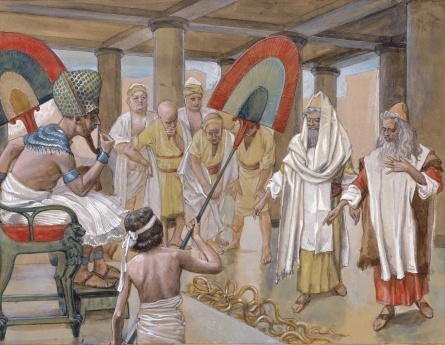
In the Old Testament the brother and spokesman of Moses who helped him confront Pharaoh and lead the Israelites out of slavery in Egypt. Appointed High Priest (Leviticus 8:12) but let the Israelites build and worship a golden calf which was idolatry (forbidden by the Ten Commandments) (Exodus 32:1-5).
Related Topics
Big ideas: Moses; Journey of Faith, Exodus, pilgrims and sojourners; Ten Commandments
- English Standard Version
- King James Version
1The Lord spoke to Moses, saying, 2Take Aaron and his sons with him, and the garments and the anointing oil and the bull of the sin offering and the two rams and the basket of unleavened bread. 3And assemble all the congregation at the entrance of the tent of meeting. 4And Moses did as the Lord commanded him, and the congregation was assembled at the entrance of the tent of meeting. 5And Moses said to the congregation, This is the thing that the Lord has commanded to be done. 6And Moses brought Aaron and his sons and washed them with water. 7And he put the coat on him and tied the sash around his waist and clothed him with the robe and put the ephod on him and tied the skillfully woven band of the ephod around him, binding it to him with the band. 8And he placed the breastpiece on him, and in the breastpiece he put the Urim and the Thummim. 9And he set the turban on his head, and on the turban, in front, he set the golden plate, the holy crown, as the Lord commanded Moses. 10Then Moses took the anointing oil and anointed the tabernacle and all that was in it, and consecrated them. 11And he sprinkled some of it on the altar seven times, and anointed the altar and all its utensils and the basin and its stand, to consecrate them. 12And he poured some of the anointing oil on Aaron's head and anointed him to consecrate him. 13And Moses brought Aaron's sons and clothed them with coats and tied sashes around their waists and bound caps on them, as the Lord commanded Moses. 14Then he brought the bull of the sin offering, and Aaron and his sons laid their hands on the head of the bull of the sin offering. 15And he killed it, and Moses took the blood, and with his finger put it on the horns of the altar around it and purified the altar and poured out the blood at the base of the altar and consecrated it to make atonement for it. 16And he took all the fat that was on the entrails and the long lobe of the liver and the two kidneys with their fat, and Moses burned them on the altar. 17But the bull and its skin and its flesh and its dung he burned up with fire outside the camp, as the Lord commanded Moses. 18Then he presented the ram of the burnt offering, and Aaron and his sons laid their hands on the head of the ram. 19And he killed it, and Moses threw the blood against the sides of the altar. 20He cut the ram into pieces, and Moses burned the head and the pieces and the fat. 21He washed the entrails and the legs with water, and Moses burned the whole ram on the altar. It was a burnt offering with a pleasing aroma, a food offering for the Lord, as the Lord commanded Moses. 22Then he presented the other ram, the ram of ordination, and Aaron and his sons laid their hands on the head of the ram. 23And he killed it, and Moses took some of its blood and put it on the lobe of Aaron's right ear and on the thumb of his right hand and on the big toe of his right foot. 24Then he presented Aaron's sons, and Moses put some of the blood on the lobes of their right ears and on the thumbs of their right hands and on the big toes of their right feet. And Moses threw the blood against the sides of the altar. 25Then he took the fat and the fat tail and all the fat that was on the entrails and the long lobe of the liver and the two kidneys with their fat and the right thigh, 26and out of the basket of unleavened bread that was before the Lord he took one unleavened loaf and one loaf of bread with oil and one wafer and placed them on the pieces of fat and on the right thigh. 27And he put all these in the hands of Aaron and in the hands of his sons and waved them as a wave offering before the Lord. 28Then Moses took them from their hands and burned them on the altar with the burnt offering. This was an ordination offering with a pleasing aroma, a food offering to the Lord. 29And Moses took the breast and waved it for a wave offering before the Lord. It was Moses' portion of the ram of ordination, as the Lord commanded Moses. 30Then Moses took some of the anointing oil and of the blood that was on the altar and sprinkled it on Aaron and his garments, and also on his sons and his sons' garments. So he consecrated Aaron and his garments, and his sons and his sons' garments with him. 31And Moses said to Aaron and his sons, Boil the flesh at the entrance of the tent of meeting, and there eat it and the bread that is in the basket of ordination offerings, as I commanded, saying, Aaron and his sons shall eat it. 32And what remains of the flesh and the bread you shall burn up with fire. 33And you shall not go outside the entrance of the tent of meeting for seven days, until the days of your ordination are completed, for it will take seven days to ordain you. 34As has been done today, the Lord has commanded to be done to make atonement for you. 35At the entrance of the tent of meeting you shall remain day and night for seven days, performing what the Lord has charged, so that you do not die, for so I have been commanded. 36And Aaron and his sons did all the things that the Lord commanded by Moses.
1And the LORD spake unto Moses, saying, 2Take Aaron and his sons with him, and the garments, and the anointing oil, and a bullock for the sin offering, and two rams, and a basket of unleavened bread; 3And gather thou all the congregation together unto the door of the tabernacle of the congregation. 4And Moses did as the LORD commanded him; and the assembly was gathered together unto the door of the tabernacle of the congregation. 5And Moses said unto the congregation, This is the thing which the LORD commanded to be done. 6And Moses brought Aaron and his sons, and washed them with water. 7And he put upon him the coat, and girded him with the girdle, and clothed him with the robe, and put the ephod upon him, and he girded him with the curious girdle of the ephod, and bound it unto him therewith. 8And he put the breastplate upon him: also he put in the breastplate the Urim and the Thummim. 9And he put the mitre upon his head; also upon the mitre, even upon his forefront, did he put the golden plate, the holy crown; as the LORD commanded Moses. 10And Moses took the anointing oil, and anointed the tabernacle and all that was therein, and sanctified them. 11And he sprinkled thereof upon the altar seven times, and anointed the altar and all his vessels, both the laver and his foot, to sanctify them. 12And he poured of the anointing oil upon Aaron's head, and anointed him, to sanctify him. 13And Moses brought Aaron's sons, and put coats upon them, and girded them with girdles, and put bonnets upon them; as the LORD commanded Moses. 14And he brought the bullock for the sin offering: and Aaron and his sons laid their hands upon the head of the bullock for the sin offering. 15And he slew it; and Moses took the blood, and put it upon the horns of the altar round about with his finger, and purified the altar, and poured the blood at the bottom of the altar, and sanctified it, to make reconciliation upon it. 16And he took all the fat that was upon the inwards, and the caul above the liver, and the two kidneys, and their fat, and Moses burned it upon the altar. 17But the bullock, and his hide, his flesh, and his dung, he burnt with fire without the camp; as the LORD commanded Moses. 18And he brought the ram for the burnt offering: and Aaron and his sons laid their hands upon the head of the ram. 19And he killed it; and Moses sprinkled the blood upon the altar round about. 20And he cut the ram into pieces; and Moses burnt the head, and the pieces, and the fat. 21And he washed the inwards and the legs in water; and Moses burnt the whole ram upon the altar: it was a burnt sacrifice for a sweet savor, and an offering made by fire unto the LORD; as the LORD commanded Moses. 22And he brought the other ram, the ram of consecration: and Aaron and his sons laid their hands upon the head of the ram. 23And he slew it; and Moses took of the blood of it, and put it upon the tip of Aaron's right ear, and upon the thumb of his right hand, and upon the great toe of his right foot. 24And he brought Aaron's sons, and Moses put of the blood upon the tip of their right ear, and upon the thumbs of their right hands, and upon the great toes of their right feet: and Moses sprinkled the blood upon the altar round about. 25And he took the fat, and the rump, and all the fat that was upon the inwards, and the caul above the liver, and the two kidneys, and their fat, and the right shoulder: 26And out of the basket of unleavened bread, that was before the LORD, he took one unleavened cake, and a cake of oiled bread, and one wafer, and put them on the fat, and upon the right shoulder: 27And he put all upon Aaron's hands, and upon his sons' hands, and waved them for a wave offering before the LORD. 28And Moses took them from off their hands, and burnt them on the altar upon the burnt offering: they were consecrations for a sweet savor: it is an offering made by fire unto the LORD. 29And Moses took the breast, and waved it for a wave offering before the LORD: for of the ram of consecration it was Moses' part; as the LORD commanded Moses. 30And Moses took of the anointing oil, and of the blood which was upon the altar, and sprinkled it upon Aaron, and upon his garments, and upon his sons, and upon his sons' garments with him; and sanctified Aaron, and his garments, and his sons, and his sons' garments with him. 31And Moses said unto Aaron and to his sons, Boil the flesh at the door of the tabernacle of the congregation: and there eat it with the bread that is in the basket of consecrations, as I commanded, saying, Aaron and his sons shall eat it. 32And that which remaineth of the flesh and of the bread shall ye burn with fire. 33And ye shall not go out of the door of the tabernacle of the congregation in seven days, until the days of your consecration be at an end: for seven days shall he consecrate you. 34As he hath done this day, so the LORD hath commanded to do, to make an atonement for you. 35Therefore shall ye abide at the door of the tabernacle of the congregation day and night seven days, and keep the charge of the LORD, that ye die not: for so I am commanded. 36So Aaron and his sons did all things which the LORD commanded by the hand of Moses.
- English Standard Version
- King James Version
1When the people saw that Moses delayed to come down from the mountain, the people gathered themselves together to Aaron and said to him, Up, make us gods who shall go before us. As for this Moses, the man who brought us up out of the land of Egypt, we do not know what has become of him. 2So Aaron said to them, Take off the rings of gold that are in the ears of your wives, your sons, and your daughters, and bring them to me. 3So all the people took off the rings of gold that were in their ears and brought them to Aaron. 4And he received the gold from their hand and fashioned it with a graving tool and made a golden calf. And they said, These are your gods, O Israel, who brought you up out of the land of Egypt! 5When Aaron saw this, he built an altar before it. And Aaron made a proclamation and said, Tomorrow shall be a feast to the Lord. 6And they rose up early the next day and offered burnt offerings and brought peace offerings. And the people sat down to eat and drink and rose up to play. 7And the Lord said to Moses, Go down, for your people, whom you brought up out of the land of Egypt, have corrupted themselves. 8They have turned aside quickly out of the way that I commanded them. They have made for themselves a golden calf and have worshiped it and sacrificed to it and said, These are your gods, O Israel, who brought you up out of the land of Egypt! 9And the Lord said to Moses, I have seen this people, and behold, it is a stiff-necked people. 10Now therefore let me alone, that my wrath may burn hot against them and I may consume them, in order that I may make a great nation of you. 11But Moses implored the Lord his God and said, O Lord, why does your wrath burn hot against your people, whom you have brought out of the land of Egypt with great power and with a mighty hand? 12Why should the Egyptians say, With evil intent did he bring them out, to kill them in the mountains and to consume them from the face of the earth? Turn from your burning anger and relent from this disaster against your people. 13Remember Abraham, Isaac, and Israel, your servants, to whom you swore by your own self, and said to them, I will multiply your offspring as the stars of heaven, and all this land that I have promised I will give to your offspring, and they shall inherit it forever. 14And the Lord relented from the disaster that he had spoken of bringing on his people. 15Then Moses turned and went down from the mountain with the two tablets of the testimony in his hand, tablets that were written on both sides; on the front and on the back they were written. 16The tablets were the work of God, and the writing was the writing of God, engraved on the tablets. 17When Joshua heard the noise of the people as they shouted, he said to Moses, There is a noise of war in the camp. 18But he said, It is not the sound of shouting for victory, or the sound of the cry of defeat, but the sound of singing that I hear. 19And as soon as he came near the camp and saw the calf and the dancing, Moses' anger burned hot, and he threw the tablets out of his hands and broke them at the foot of the mountain. 20He took the calf that they had made and burned it with fire and ground it to powder and scattered it on the water and made the people of Israel drink it. 21And Moses said to Aaron, What did this people do to you that you have brought such a great sin upon them? 22And Aaron said, Let not the anger of my lord burn hot. You know the people, that they are set on evil. 23For they said to me, Make us gods who shall go before us. As for this Moses, the man who brought us up out of the land of Egypt, we do not know what has become of him. 24So I said to them, Let any who have gold take it off. So they gave it to me, and I threw it into the fire, and out came this calf. 25And when Moses saw that the people had broken loose (for Aaron had let them break loose, to the derision of their enemies), 26then Moses stood in the gate of the camp and said, Who is on the Lord's side? Come to me. And all the sons of Levi gathered around him. 27And he said to them, Thus says the Lord God of Israel, Put your sword on your side each of you, and go to and fro from gate to gate throughout the camp, and each of you kill his brother and his companion and his neighbor. 28And the sons of Levi did according to the word of Moses. And that day about three thousand men of the people fell. 29And Moses said, Today you have been ordained for the service of the Lord, each one at the cost of his son and of his brother, so that he might bestow a blessing upon you this day. 30The next day Moses said to the people, You have sinned a great sin. And now I will go up to the Lord; perhaps I can make atonement for your sin. 31So Moses returned to the Lord and said, Alas, this people has sinned a great sin. They have made for themselves gods of gold. 32But now, if you will forgive their sin - but if not, please blot me out of your book that you have written. 33But the Lord said to Moses, Whoever has sinned against me, I will blot out of my book. 34But now go, lead the people to the place about which I have spoken to you; behold, my angel shall go before you. Nevertheless, in the day when I visit, I will visit their sin upon them. 35Then the Lord sent a plague on the people, because they made the calf, the one that Aaron made.
1And when the people saw that Moses delayed to come down out of the mount, the people gathered themselves together unto Aaron, and said unto him, Up, make us gods, which shall go before us; for as for this Moses, the man that brought us up out of the land of Egypt, we wot not what is become of him. 2And Aaron said unto them, Break off the golden earrings, which are in the ears of your wives, of your sons, and of your daughters, and bring them unto me. 3And all the people brake off the golden earrings which were in their ears, and brought them unto Aaron. 4And he received them at their hand, and fashioned it with a graving tool, after he had made it a molten calf: and they said, These be thy gods, O Israel, which brought thee up out of the land of Egypt. 5And when Aaron saw it, he built an altar before it; and Aaron made proclamation, and said, To morrow is a feast to the LORD. 6And they rose up early on the morrow, and offered burnt offerings, and brought peace offerings; and the people sat down to eat and to drink, and rose up to play. 7And the LORD said unto Moses, Go, get thee down; for thy people, which thou broughtest out of the land of Egypt, have corrupted themselves: 8They have turned aside quickly out of the way which I commanded them: they have made them a molten calf, and have worshipped it, and have sacrificed thereunto, and said, These be thy gods, O Israel, which have brought thee up out of the land of Egypt. 9And the LORD said unto Moses, I have seen this people, and, behold, it is a stiffnecked people: 10Now therefore let me alone, that my wrath may wax hot against them, and that I may consume them: and I will make of thee a great nation. 11And Moses besought the LORD his God, and said, LORD, why doth thy wrath wax hot against thy people, which thou hast brought forth out of the land of Egypt with great power, and with a mighty hand? 12Wherefore should the Egyptians speak, and say, For mischief did he bring them out, to slay them in the mountains, and to consume them from the face of the earth? Turn from thy fierce wrath, and repent of this evil against thy people. 13Remember Abraham, Isaac, and Israel, thy servants, to whom thou swarest by thine own self, and saidst unto them, I will multiply your seed as the stars of heaven, and all this land that I have spoken of will I give unto your seed, and they shall inherit it for ever. 14And the LORD repented of the evil which he thought to do unto his people. 15And Moses turned, and went down from the mount, and the two tables of the testimony were in his hand: the tables were written on both their sides; on the one side and on the other were they written. 16And the tables were the work of God, and the writing was the writing of God, graven upon the tables. 17And when Joshua heard the noise of the people as they shouted, he said unto Moses, There is a noise of war in the camp. 18And he said, It is not the voice of them that shout for mastery, neither is it the voice of them that cry for being overcome: but the noise of them that sing do I hear. 19And it came to pass, as soon as he came nigh unto the camp, that he saw the calf, and the dancing: and Moses' anger waxed hot, and he cast the tables out of his hands, and brake them beneath the mount. 20And he took the calf which they had made, and burnt it in the fire, and ground it to powder, and strewed it upon the water, and made the children of Israel drink of it. 21And Moses said unto Aaron, What did this people unto thee, that thou hast brought so great a sin upon them? 22And Aaron said, Let not the anger of my lord wax hot: thou knowest the people, that they are set on mischief. 23For they said unto me, Make us gods, which shall go before us: for as for this Moses, the man that brought us up out of the land of Egypt, we wot not what is become of him. 24And I said unto them, Whosoever hath any gold, let them break it off. So they gave it me: then I cast it into the fire, and there came out this calf. 25And when Moses saw that the people were naked; (for Aaron had made them naked unto their shame among their enemies:) 26Then Moses stood in the gate of the camp, and said, Who is on the LORD's side? let him come unto me. And all the sons of Levi gathered themselves together unto him. 27And he said unto them, Thus saith the LORD God of Israel, Put every man his sword by his side, and go in and out from gate to gate throughout the camp, and slay every man his brother, and every man his companion, and every man his neighbor. 28And the children of Levi did according to the word of Moses: and there fell of the people that day about three thousand men. 29For Moses had said, Consecrate yourselves today to the LORD, even every man upon his son, and upon his brother; that he may bestow upon you a blessing this day. 30And it came to pass on the morrow, that Moses said unto the people, Ye have sinned a great sin: and now I will go up unto the LORD; peradventure I shall make an atonement for your sin. 31And Moses returned unto the LORD, and said, Oh, this people have sinned a great sin, and have made them gods of gold. 32Yet now, if thou wilt forgive their sin--; and if not, blot me, I pray thee, out of thy book which thou hast written. 33And the LORD said unto Moses, Whosoever hath sinned against me, him will I blot out of my book. 34Therefore now go, lead the people unto the place of which I have spoken unto thee: behold, mine Angel shall go before thee: nevertheless in the day when I visit I will visit their sin upon them. 35And the LORD plagued the people, because they made the calf, which Aaron made.
A 'testament' is a covenant or binding agreement and is a term used in the Bible of God's relationship with his people). The sacred writings of Judaism (the Hebrew Bible). These also form the first part of the Christian Bible.
Very important Jewish leader described in the Book of Exodus in the Old Testament. Moses led the Jewish people out of slavery in Egypt to the Promised Land. Received the Ten Commandments form God.
In the Old Testament the title of the rulers of Egypt.
Descendant of Israel (Jacob) and occupant of Israel.
In the Old Testament the land where Joseph and Jacob found sustenance in times of famine, though later Israelites were held captive and made to work as slaves for the Pharaoh.
In the Bible this refers to the most senior priest of the Temple or Tabernacle. In the New Testament Jesus is described as the perfect High Priest.
1. Doing homage and giving honour and respect, especially to God. Acts of devotion. Human response to the perceived presence of the divine.
2. The part of the Christian liturgy usually consisting of sung material and prayers of thanksgiving.
In the Old Testament book of Exodus, the people of Israel made a golden calf whilst Moses was on Mount Sinai receiving the Ten Commandments.
The worship of an idol. An idol, in the Bible, is:
1. An object of worship other than God.
2. Anything which usurps the place of God in the lives of human beings.
Also called 'The Decalogue' (Ten Words). Instructions said to have been given to Moses by God on Mount Sinai, which have not only shaped Jewish and Christian belief and practice but also strongly influenced the legal systems of many countries.
