
Measure for Measure Contents
- Social / political context
- Religious / philosophical context
- The Theatre
- Act I
- Act II
- Act III
- Act IV
- Act V
Measure for Measure
William Shakespeare's Measure for Measure text guide
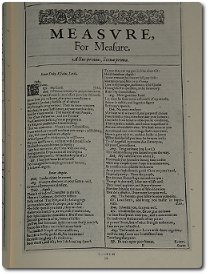
Measure for Measure was probably written in 1604, a year after King James I (who was also King James VI of Scotland) had come to the throne of England. (See also Social/political context > The Stuart monarchy.)
Shakespeare sets the play in Vienna, which he imagines as a city-state (which it never was in reality). However, in many ways it also seems to depict English society, attitudes and beliefs of Shakespeare’s time, which the audience would recognise.
It is also important to realise that people of Shakespeare’s own age (he was born in 1564) in his audience were the first generation of Englishmen and women who had been brought up hearing the Bible in English.
William Shakespeare
|
Context of Measure for Measure.jpg) Shakespeare was born in the 16th century, a century remembered for the English reformation and the ongoing struggle between Catholicism and Protestantism for dominance. Depending on the monarch, the population had to adapt to different rule and practices, or risk their lives. Read more . . . Shakespeare was born in the 16th century, a century remembered for the English reformation and the ongoing struggle between Catholicism and Protestantism for dominance. Depending on the monarch, the population had to adapt to different rule and practices, or risk their lives. Read more . . . |
.jpg) A prolific writer of plays and poems, Shakespeare became well-known in London around 1592. The theatre his had shares in, The Globe, staged many of his plays from 1598.
A prolific writer of plays and poems, Shakespeare became well-known in London around 1592. The theatre his had shares in, The Globe, staged many of his plays from 1598. Dive in to the Measure for Measure text guide
Synopses and commentary - Scene by scene synopsis, commentary and analysis of the entire play.
Characters in the play - Detailed analysis of all the important characters in Shakespeare's Measure for Measure.
Measure for Measure Timeline - Helpfully puts history, literary events and Shakespeare's life side by side so you can make sense of events.
Themes and significant ideas - Research themes and significant ideas that feature in Measure for Measure.
Measure for Measure e-book - Read the play and research the text, all for free and online.
How to do well in your essaysDecide what the key words of the question are, and underline them. Want more essay and exam tips? |
Are you a teacher?We have something for you as well! Free downloadable Measure for Measure worksheets ready to be printed and used in class. |

