- English Standard Version
- King James Version
1In the beginning was the Word, and the Word was with God, and the Word was God. 2He was in the beginning with God. 3All things were made through him, and without him was not any thing made that was made. 4In him was life, and the life was the light of men. 5The light shines in the darkness, and the darkness has not overcome it. 6There was a man sent from God, whose name was John. 7He came as a witness, to bear witness about the light, that all might believe through him. 8He was not the light, but came to bear witness about the light. 9The true light, which gives light to everyone, was coming into the world. 10He was in the world, and the world was made through him, yet the world did not know him. 11He came to his own, and his own people did not receive him. 12But to all who did receive him, who believed in his name, he gave the right to become children of God, 13who were born, not of blood nor of the will of the flesh nor of the will of man, but of God. 14And the Word became flesh and dwelt among us, and we have seen his glory, glory as of the only Son from the Father, full of grace and truth. 15(John bore witness about him, and cried out, This was he of whom I said, He who comes after me ranks before me, because he was before me.) 16For from his fullness we have all received, grace upon grace. 17For the law was given through Moses; grace and truth came through Jesus Christ. 18No one has ever seen God; the only God, who is at the Father's side, he has made him known. 19And this is the testimony of John, when the Jews sent priests and Levites from Jerusalem to ask him, Who are you? 20He confessed, and did not deny, but confessed, I am not the Christ. 21And they asked him, What then? Are you Elijah? He said, I am not. Are you the Prophet? And he answered, No. 22So they said to him, Who are you? We need to give an answer to those who sent us. What do you say about yourself? 23He said, I am the voice of one crying out in the wilderness, Make straight the way of the Lord, as the prophet Isaiah said. 24(Now they had been sent from the Pharisees.) 25They asked him, Then why are you baptizing, if you are neither the Christ, nor Elijah, nor the Prophet? 26John answered them, I baptize with water, but among you stands one you do not know, 27even he who comes after me, the strap of whose sandal I am not worthy to untie. 28These things took place in Bethany across the Jordan, where John was baptizing. 29The next day he saw Jesus coming toward him, and said, Behold, the Lamb of God, who takes away the sin of the world! 30This is he of whom I said, After me comes a man who ranks before me, because he was before me. 31I myself did not know him, but for this purpose I came baptizing with water, that he might be revealed to Israel. 32And John bore witness: I saw the Spirit descend from heaven like a dove, and it remained on him. 33I myself did not know him, but he who sent me to baptize with water said to me, He on whom you see the Spirit descend and remain, this is he who baptizes with the Holy Spirit. 34And I have seen and have borne witness that this is the Son of God. 35The next day again John was standing with two of his disciples, 36and he looked at Jesus as he walked by and said, Behold, the Lamb of God! 37The two disciples heard him say this, and they followed Jesus. 38Jesus turned and saw them following and said to them, What are you seeking? And they said to him, Rabbi (which means Teacher), where are you staying? 39He said to them, Come and you will see. So they came and saw where he was staying, and they stayed with him that day, for it was about the tenth hour. 40One of the two who heard John speak and followed Jesus was Andrew, Simon Peter's brother. 41He first found his own brother Simon and said to him, We have found the Messiah (which means Christ). 42He brought him to Jesus. Jesus looked at him and said, You are Simon the son of John. You shall be called Cephas (which means Peter). 43The next day Jesus decided to go to Galilee. He found Philip and said to him, Follow me. 44Now Philip was from Bethsaida, the city of Andrew and Peter. 45Philip found Nathanael and said to him, We have found him of whom Moses in the Law and also the prophets wrote, Jesus of Nazareth, the son of Joseph. 46Nathanael said to him, Can anything good come out of Nazareth? Philip said to him, Come and see. 47Jesus saw Nathanael coming toward him and said of him, Behold, an Israelite indeed, in whom there is no deceit! 48Nathanael said to him, How do you know me? Jesus answered him, Before Philip called you, when you were under the fig tree, I saw you. 49Nathanael answered him, Rabbi, you are the Son of God! You are the King of Israel! 50Jesus answered him, Because I said to you, I saw you under the fig tree, do you believe? You will see greater things than these. 51And he said to him, Truly, truly, I say to you, you will see heaven opened, and the angels of God ascending and descending on the Son of Man.
1In the beginning was the Word, and the Word was with God, and the Word was God. 2The same was in the beginning with God. 3All things were made by him; and without him was not any thing made that was made. 4In him was life; and the life was the light of men. 5And the light shineth in darkness; and the darkness comprehended it not. 6There was a man sent from God, whose name was John. 7The same came for a witness, to bear witness of the Light, that all men through him might believe. 8He was not that Light, but was sent to bear witness of that Light. 9That was the true Light, which lighteth every man that cometh into the world. 10He was in the world, and the world was made by him, and the world knew him not. 11He came unto his own, and his own received him not. 12But as many as received him, to them gave he power to become the sons of God, even to them that believe on his name: 13Which were born, not of blood, nor of the will of the flesh, nor of the will of man, but of God. 14And the Word was made flesh, and dwelt among us, (and we beheld his glory, the glory as of the only begotten of the Father,) full of grace and truth. 15John bare witness of him, and cried, saying, This was he of whom I spake, He that cometh after me is preferred before me: for he was before me. 16And of his fulness have all we received, and grace for grace. 17For the law was given by Moses, but grace and truth came by Jesus Christ. 18No man hath seen God at any time, the only begotten Son, which is in the bosom of the Father, he hath declared him. 19And this is the record of John, when the Jews sent priests and Levites from Jerusalem to ask him, Who art thou? 20And he confessed, and denied not; but confessed, I am not the Christ. 21And they asked him, What then? Art thou Elias? And he saith, I am not. Art thou that prophet? And he answered, No. 22Then said they unto him, Who art thou? that we may give an answer to them that sent us. What sayest thou of thyself? 23He said, I am the voice of one crying in the wilderness, Make straight the way of the Lord, as said the prophet Esaias. 24And they which were sent were of the Pharisees. 25And they asked him, and said unto him, Why baptizest thou then, if thou be not that Christ, nor Elias, neither that prophet? 26John answered them, saying, I baptize with water: but there standeth one among you, whom ye know not; 27He it is, who coming after me is preferred before me, whose shoe's latchet I am not worthy to unloose. 28These things were done in Bethabara beyond Jordan, where John was baptizing. 29The next day John seeth Jesus coming unto him, and saith, Behold the Lamb of God, which taketh away the sin of the world. 30This is he of whom I said, After me cometh a man which is preferred before me: for he was before me. 31And I knew him not: but that he should be made manifest to Israel, therefore am I come baptizing with water. 32And John bare record, saying, I saw the Spirit descending from heaven like a dove, and it abode upon him. 33And I knew him not: but he that sent me to baptize with water, the same said unto me, Upon whom thou shalt see the Spirit descending, and remaining on him, the same is he which baptizeth with the Holy Ghost. 34And I saw, and bare record that this is the Son of God. 35Again the next day after John stood, and two of his disciples; 36And looking upon Jesus as he walked, he saith, Behold the Lamb of God! 37And the two disciples heard him speak, and they followed Jesus. 38Then Jesus turned, and saw them following, and saith unto them, What seek ye? They said unto him, Rabbi, (which is to say, being interpreted, Master,) where dwellest thou? 39He saith unto them, Come and see. They came and saw where he dwelt, and abode with him that day: for it was about the tenth hour. 40One of the two which heard John speak, and followed him, was Andrew, Simon Peter's brother. 41He first findeth his own brother Simon, and saith unto him, We have found the Messias, which is, being interpreted, the Christ. 42And he brought him to Jesus. And when Jesus beheld him, he said, Thou art Simon the son of Jona: thou shalt be called Cephas, which is by interpretation, A stone. 43The day following Jesus would go forth into Galilee, and findeth Philip, and saith unto him, Follow me. 44Now Philip was of Bethsaida, the city of Andrew and Peter. 45Philip findeth Nathanael, and saith unto him, We have found him, of whom Moses in the law, and the prophets, did write, Jesus of Nazareth, the son of Joseph. 46And Nathanael said unto him, Can there any good thing come out of Nazareth? Philip saith unto him, Come and see. 47Jesus saw Nathanael coming to him, and saith of him, Behold an Israelite indeed, in whom is no guile! 48Nathanael saith unto him, Whence knowest thou me? Jesus answered and said unto him, Before that Philip called thee, when thou wast under the fig tree, I saw thee. 49Nathanael answered and saith unto him, Rabbi, thou art the Son of God; thou art the King of Israel. 50Jesus answered and said unto him, Because I said unto thee, I saw thee under the fig tree, believest thou? thou shalt see greater things than these. 51And he saith unto him, Verily, verily, I say unto you, Hereafter ye shall see heaven open, and the angels of God ascending and descending upon the Son of man.

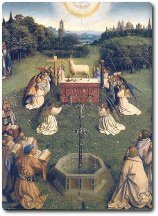 Although the Satire uses sexual imagery, in this sonnet it becomes more and more focused, till the poet finishes with the final conceit that the true church will be she who is most promiscuous, open to the gaze and love of most men! He can carry this off since the church is described in the Bible itself as ‘the Bride of Christ' and ‘the wife of the Lamb' Revelation 21:9-10; Revelation 22:17, with Christ (the Lamb of God, as in John 1:29) as her bridegroom.