
Metaphysical poets, selected poems Contents
- Social / political context
- Religious / philosophical context
- Literary context: ideas and innovations
- Aire and Angels
- A Hymn to God the Father
- A Hymn to God, my God, in my Sicknesse
- A Nocturnall upon St. Lucies day
- At the Round Earth's Imagin'd Corners
- A Valediction: Forbidding Mourning
- Synopsis of Valediction: Forbidding Mourning
- Commentary on Valediction: Forbidding Mourning
- Language and tone in Valediction: Forbidding Mourning
- Structure and versification in Valediction: Forbidding Mourning
- Imagery and symbolism in Valediction: Forbidding Mourning
- Themes in Valediction: Forbidding Mourning
- A Valediction: of Weeping
- Batter my heart
- Death be not Proud
- Elegie XIX: Going to Bed
- Elegie XVI: On his Mistris
- Good Friday, 1613. Riding Westward
- Lovers' Infiniteness
- Oh my blacke Soule!
- Satyre III: 'On Religion'
- Show me Deare Christ
- Since She Whom I Lov'd
- Song: Goe, and catche a falling starre
- The Anniversarie
- The Dreame
- The Extasie
- The Flea
- The Good-morrow
- The Sunne Rising
- This is my playes last scene
- Twicknam Garden
- What if this present
- Aaron
- Affliction I
- Death
- Discipline
- Easter Wings
- Jordan I
- Jordan II
- Life
- Love II
- Man
- Prayer I
- Redemption
- The Church-floore
- The Collar
- Vertue
- Hymn in Adoration of the Blessed Sacrament
- Hymn to St Teresa
- St Mary Magdalene, or the Weeper
- To the Countesse of Denbigh
- Ascension - Hymn
- Man
- Regeneration
- The Night
- The Retreate
- The Water-fall
- A Dialogue between Soul and Body
- On a Drop of Dew
- The Coronet
- The Definition of Love
- The Garden
- The Mower Against Gardens
- The Mower to the Glo-Worms
- The Mower's Song
- The Nymph Complaining for the Death of her Faun
- The Picture of Little T.C. in a Prospect of Flowers
- To his Coy Mistress
- Upon Appleton House, to my Lord Fairfax
- An Elegie upon the Death of the Deane of Paul's Dr John Donne
- To a Lady that Desired I would Love her
Commentary on Going to Bed
The poem falls into two sections
-
ll.1-24 deal with the undressing
-
ll.25-48 with nakedness.
Donne is obviously impatient, re-iterating the opening ‘Come', as well as the commands ‘Off with ...' in ll.5,11, 15, 17, and other similar exhortations. He wants action, not sleep.
Lines 1-24
Just as the Elizabethans itemised each part of a woman's anatomy in the conventions of their love poetry, so Donne, in mockery, itemises each article of clothing that needs removing. It is not long before we realise how much more extensive a lady's wardrobe was in those days, and how many layers of clothing she wore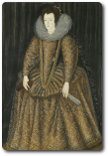
- The girdle (or ‘zone') is followed by
- That spangled breastplate' and by
- The corset (‘busk')
- Only then can the gown come off
- Headpiece
- Then shoes
- This leaves her in her under-dress or petticoat which he then likens to the white robes of angels, rather than of ghosts.
Lines 25-48
The final nakedness is preceded by some energetic foreplay: ‘Licence my roving hands'. The imagery is of exploration and discovery. She is his possession, ‘My kingdom'. Finally she is about to slip off her final undergarment, and ‘Full nakedness!' is celebrated. Theological imagery of revelation is used, as well as of being given grace to receive it. This poetic strip-tease, however, stops just where all teases stop, without the full knowledge of whether she has actually ‘cast all ... this white lynnen hence'. All we know at the end is that the poet at least is naked in anticipation of their love-making.
- Pick out examples of what you consider to be erotic language in Going to Bed
- How does Donne bring a humour to it?
- How would you see Donne's treatment of the woman here?
- Has this poem any appeal to a female reader?
- Or is it merely written for the boys?
- Has this poem any appeal to a female reader?
