
Gerard Manley Hopkins, selected poems Contents
- As Kingfishers Catch Fire
- Binsey Poplars
- The Blessed Virgin Mary Compared to the Air We Breathe
- Carrion Comfort
- Duns Scotus' Oxford
- God's Grandeur
- Harry Ploughman
- Henry Purcell
- Hurrahing in Harvest
- Inversnaid
- I Wake and Feel the Fell of Dark
- Synopsis of I Wake and Feel the Fell of Dark
- Commentary on I Wake and Feel the Fell of Dark
- Language and tone in I Wake and Feel the Fell of Dark
- Structure and versification in I Wake and Feel the Fell of Dark
- Imagery and symbolism in I Wake and Feel the Fell of Dark
- Themes in I Wake and Feel the Fell of Dark
- The Leaden Echo and the Golden Echo
- Synopsis of The Leaden Echo and the Golden Echo
- Commentary on The Leaden Echo and the Golden Echo
- Language and tone in The Leaden Echo and the Golden Echo
- Structure and versification in The Leaden Echo and the Golden Echo
- Imagery and symbolism in The Leaden Echo and the Golden Echo
- Themes in The Leaden Echo and the Golden Echo
- The May Magnificat
- My Own Heart, Let Me Have More Pity On
- Synopsis of My Own Heart, Let Me Have More Pity On
- Commentary on My Own Heart, Let Me Have More Pity On
- Language and tone in My Own Heart, Let Me Have More Pity On
- Structure and versification in My Own Heart, Let Me Have More Pity On
- Imagery and symbolism in My Own Heart, Let Me Have More Pity On
- Themes in My Own Heart, Let Me Have More Pity On
- No Worst, There is None
- Patience, Hard Thing!
- Pied Beauty
- The Sea and the Skylark
- Spelt from Sibyl's Leaves
- Spring
- Spring and Fall
- St. Alphonsus Rodriguez
- The Starlight Night
- That Nature is a Heraclitean Fire and of the Comfort of the Resurrection
- Synopsis of That Nature is a Heraclitean Fire
- Commentary on That Nature is a Heraclitean Fire
- Language and tone in That Nature is a Heraclitean Fire
- Structure and versification in That Nature is a Heraclitean Fire
- Imagery and symbolism in That Nature is a Heraclitean Fire
- Themes in That Nature is a Heraclitean Fire
- Thou Art Indeed Just, Lord
- Tom's Garland
- To Seem the Stranger
- To What Serves Mortal Beauty
- The Windhover
- The Wreck of the Deutschland
- Beauty and its purpose
- The beauty, variety and uniqueness of nature
- Christ's beauty
- Conservation and renewal of nature
- God's sovereignty
- The grace of ordinary life
- Mary as a channel of grace
- Nature as God's book
- Night, the dark night of the soul
- Serving God
- Suffering and faith
- The temptation to despair
- The ugliness of modern life
- Understanding evil in a world God has made
Synopsis of Henry Purcell
An expanded sonnet
Like Duns Scotus' Oxford, this sonnet was written during Hopkins' short stay in Oxford in 1879. What is significant is that it is the first of his expanded sonnets, which the line lengths move way beyond the pentameter of his previous ones. He was to use this expanded sonnet form later in a number of highly successful poems, such as Felix Randall and some of his last sonnets. This one is best regarded as experimental.
A complex poem
Hopkins' friend, Robert Bridges, to whom he sent all his poems, found Henry Purcell very difficult, requiring lines explained to him by Hopkins. As Bridges kept all his letters, we have the benefit of these explanations, though the explanations are sometimes almost as difficult as the original lines! Bridges' opinion was that Hopkins was guilty of a ‘purely artistic wantonness' with his words and phraseology - a kind way of saying he was being too clever.
Difficulty in poetry has to be judged as objectively as possible:
- If the difficulty arises from the complexity of the thought or idea or perception of the poet, fair enough
- If it is just the poet showing off in some way, it is to be condemned
- ‘Could it have been said more simply?' is always a relevant question, and we shall be asking it.
Musical inspiration
Hopkins came from an artistic family, in which the enjoyment of music took a significant place. He was especially keen on Henry Purcell. More on Purcell?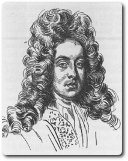
More on Purcell: Henry Purcell was an English composer living at the end of the seventeenth and beginning of the eighteenth century. Hopkins suggests Purcell was among ‘the greats', having an important part in the development of British music. Purcell's opera ‘Dido and Aeneas' is one of a few significant British operas.
Quite why Hopkins chose this moment of time to write of his admiration is not clear. It is interesting that Hopkins chose to write about a philosopher and a musician at much the same time.
- Have you ever experienced grappling with a difficult poem, and finding that, finally, it has excited you as you have pieced it together?
- Has this happened with Hopkins' poetry for you?
- Is there any person from the past about whom you would like to write a poem?
- Or would you like to write about the experience of reading or hearing something they have created?
